

For importers, distributors, brand owners and project buyers sourcing portable power stations, the choice between a fixed-capacity unit and an expandable system comes down to the load profile, required runtime and deployment plan. A fixed unit is easier to specify when those requirements are stable; an expandable system may suit projects that need a documented route to add stored energy later. Before choosing, compare the host model, compatible battery, supported module count, charging method, output limits and complete package cost. The combined Wh figure alone is not enough to establish suitability.
Review the Expansion Batteries range, then confirm which host models support each module before including expansion in a quotation.

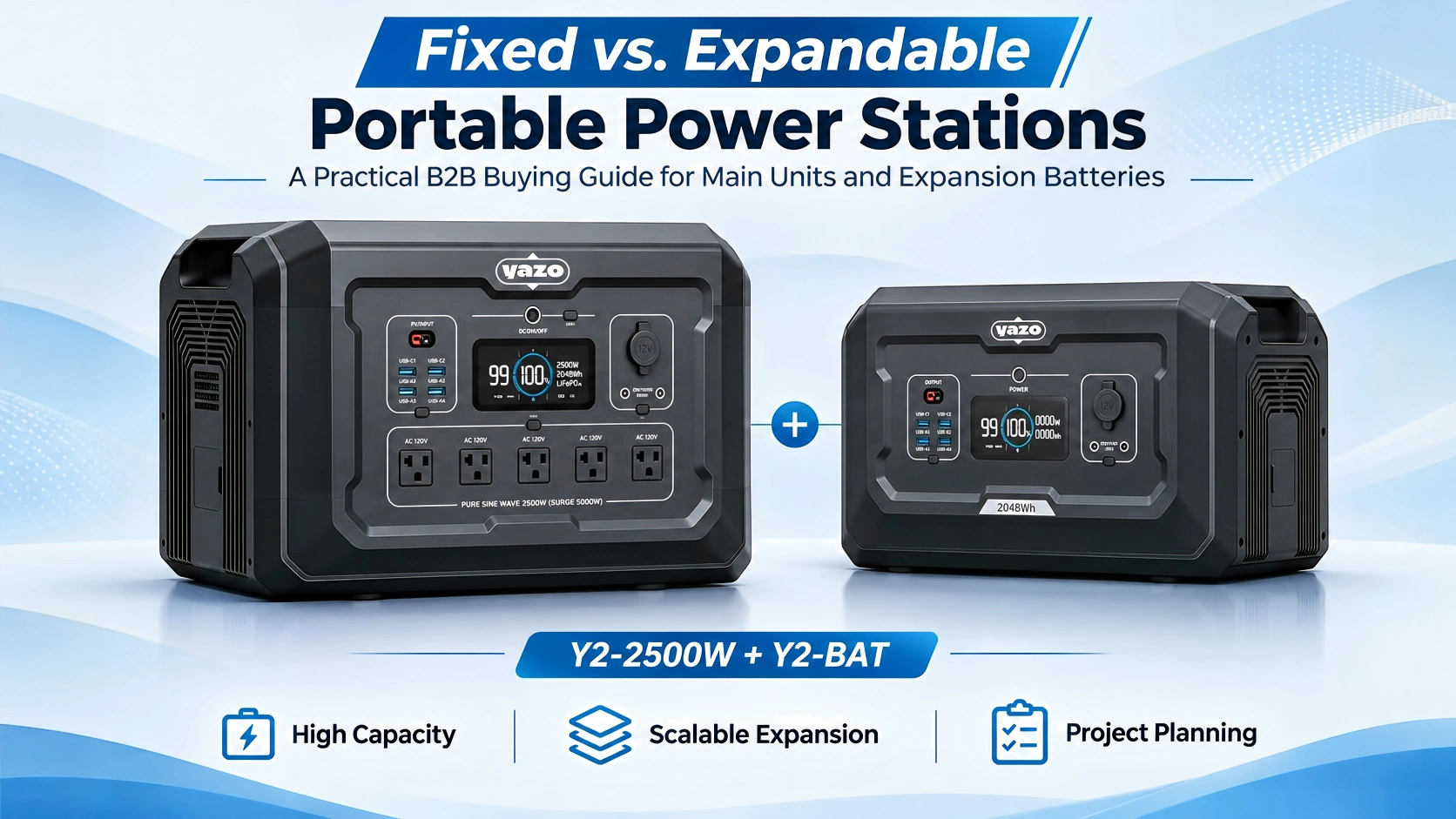
Illustrative product comparison showing the YAZO Y2-2500W base unit and Y2-BAT expansion battery as separate products. The image does not establish a confirmed connection or compatibility configuration.
1. Compare Initial Capacity and Future Expansion
A fixed-capacity product is purchased with a defined energy rating. The buyer selects that configuration up front and checks whether it covers the expected application. An expandable product introduces a second decision: which base unit is required now, and which compatible expansion options may be needed later?
The distinction matters for purchasing teams because the base unit and expansion battery may be separate order items, with their own model references, packaging and documentation. The comparison should therefore include the initial configuration and the possible future configuration-not only the combined capacity shown in a sales presentation.
| Comparison point | Fixed-capacity system | Expandable system | What the buyer should verify |
|---|---|---|---|
| Capacity at purchase | The selected unit has one defined rated energy configuration. | The initial configuration may include a host unit with or without additional battery modules. | Base-unit Wh rating and the exact contents of the quoted package. |
| Future capacity | The energy capacity remains tied to the purchased unit. | Additional energy may be available through approved expansion batteries. | Compatible expansion model, maximum supported quantity and documented total configuration. |
| Output power | Defined by the unit's rated output specifications. | Still governed by the host system's documented output limits unless the manufacturer specifies otherwise. | Continuous output, surge capability and output-port ratings for the selected configuration. |
| Runtime planning | Planned around the unit's rated energy and the actual load profile. | May provide more energy reserve when the expansion configuration is supported. | Runtime assumptions, operating conditions and any system-level restrictions. |
| SKU structure | Often simpler to quote and stock as one product configuration. | May require separate host-unit and expansion-battery SKUs or defined kits. | SKU mapping, package contents, accessory references and ordering rules. |
| Portability | One unit to move and position, subject to its size and weight. | The complete deployment may involve more than one component. | Individual and combined weights, dimensions, handling and installation requirements. |
| Service and support | Service is centered on the purchased unit and its approved configuration. | Support may need to cover the host, battery module, connection and system combination. | Warranty scope, troubleshooting process and supported replacement parts. |
| Commercial planning | One principal product configuration for quotation and stock planning. | A base offer and optional expansion items may create more package choices. | Separate pricing, order quantities, packaging and availability for each item. |
For a distributor, compare the complete order configuration. Ask the supplier to quote the host unit and expansion battery separately, list each package's contents, and confirm the approved combination in writing. A combined Wh figure is not evidence of compatibility.

Visual summary for project evaluation. The Y2-2500W and Y2-BAT pairing, use as a spare battery, swap procedure and supported module quantity must be confirmed in writing for the exact model and hardware revision before these points are used as product claims.
2. Compare Inventory and SKU Complexity
Product architecture affects channel operations as well as runtime. A fixed-capacity range is often simpler to list and stock as complete-unit SKUs. An expandable range can support a base-unit-plus-module offer, but it adds separate references for batteries, connection accessories, packaging and after-sales support.
| Channel task | Fixed-capacity range | Expandable range |
|---|---|---|
| Product listing | List the unit's capacity, output and included accessories for each SKU. | Explain the host unit and identify compatible expansion batteries as separate items or approved kits. |
| Inventory planning | Forecast demand by complete-unit model and regional version. | Plan stock for host units, compatible batteries, connection accessories and any defined bundles. |
| Quotation | Quote the selected unit and its confirmed package contents. | Show base configuration and optional expansion items clearly, with model references. |
| Customer support | Identify the unit and its approved specification. | Identify both the host and expansion battery, plus the actual connection configuration. |
| Product changes | Track changes to the unit and its regional configuration. | Track changes that may affect the host, expansion module, interface or approved combination. |
For buyers sourcing from a China-based portable power station supplier, confirm whether the quoted company is the manufacturing factory or a trading/export partner. Identify who issues the compatibility confirmation and who handles warranty and after-sales support. Each product listing should name the host models that accept the expansion battery.
For wholesale channels, decide whether to stock one fixed configuration, a host unit with optional expansion batteries, or pre-defined kits. Keep SKU references, package contents and compatibility statements consistent across product listings and quotations.
3. Compare Runtime Flexibility
Runtime requirements can change even when the device list stays the same. If the load schedule is stable, size the fixed-capacity unit against expected energy use and an appropriate reserve. If operating hours or loads may increase after deployment, consider a modular system only when the host model supports the required expansion configuration.
| Operating scenario | Fixed-capacity consideration | Expandable-system consideration | Information to collect |
|---|---|---|---|
| Known load, consistent schedule | Select a unit against the defined load and operating period. | Expansion may not be necessary if the base unit already meets the requirement. | Equipment watts, simultaneous use and target runtime. |
| Runtime may increase later | A larger fixed-capacity model may need to be selected at the start. | A supported expansion path may allow the project to add energy capacity later. | Expected future loads, expansion timing and compatible module availability. |
| Variable daily demand | The selected capacity should account for the higher-demand operating periods. | A modular configuration may suit a project with changing energy needs, if the system supports the required setup. | Typical and peak-day load schedules, operating hours and recharge windows. |
| Longer deployment away from grid power | Check whether the unit's capacity and available recharging options suit the deployment. | Confirm total supported energy, charging arrangements and how the modules are used together. | Deployment duration, charging access, solar or AC input requirements and site conditions. |
An expansion battery increases the available stored energy only within the approved system configuration. It does not automatically change the host unit's rated output or guarantee a proportional increase in usable runtime. Actual operating time depends on the connected load, conversion losses, operating conditions and the product's control limits. Avoid promising a fixed runtime without the relevant model data and load assumptions.
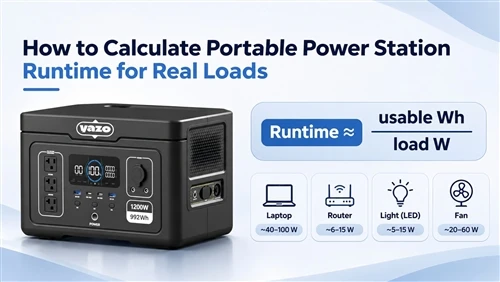
If your team needs to estimate operating time from real equipment loads, see How to Calculate Portable Power Station Runtime for Real Loads. That guide addresses load and runtime estimation; this PC03 comparison focuses on whether a fixed or expandable product architecture better fits the project.
4. Compare Portability and Deployment
A larger energy system may be useful, but it still has to be transported, positioned, connected and managed. The practical difference between a fixed-capacity unit and an expandable setup depends on the size and weight of the actual products, the number of components and the way the deployment is organized.
For home backup, a system may remain in a planned location, making a modular configuration easier to evaluate if the additional capacity is required. For remote work, events or mobile applications, the combined weight, number of components and setup time may matter more. Compare the complete deployment kit rather than the host unit alone.
Buyers reviewing home backup applications can also explore Home Backup Power Stations. For mobile or demanding project use, compare the application and product requirements with the Industrial Power Stations range.
5. Compatibility Is Model-Specific
Before approving an expandable system, ask the supplier to identify the exact host unit, expansion battery, connection cable and supported configuration. Compatibility may depend on model, hardware revision and regional version, so request confirmation against the current product documentation.

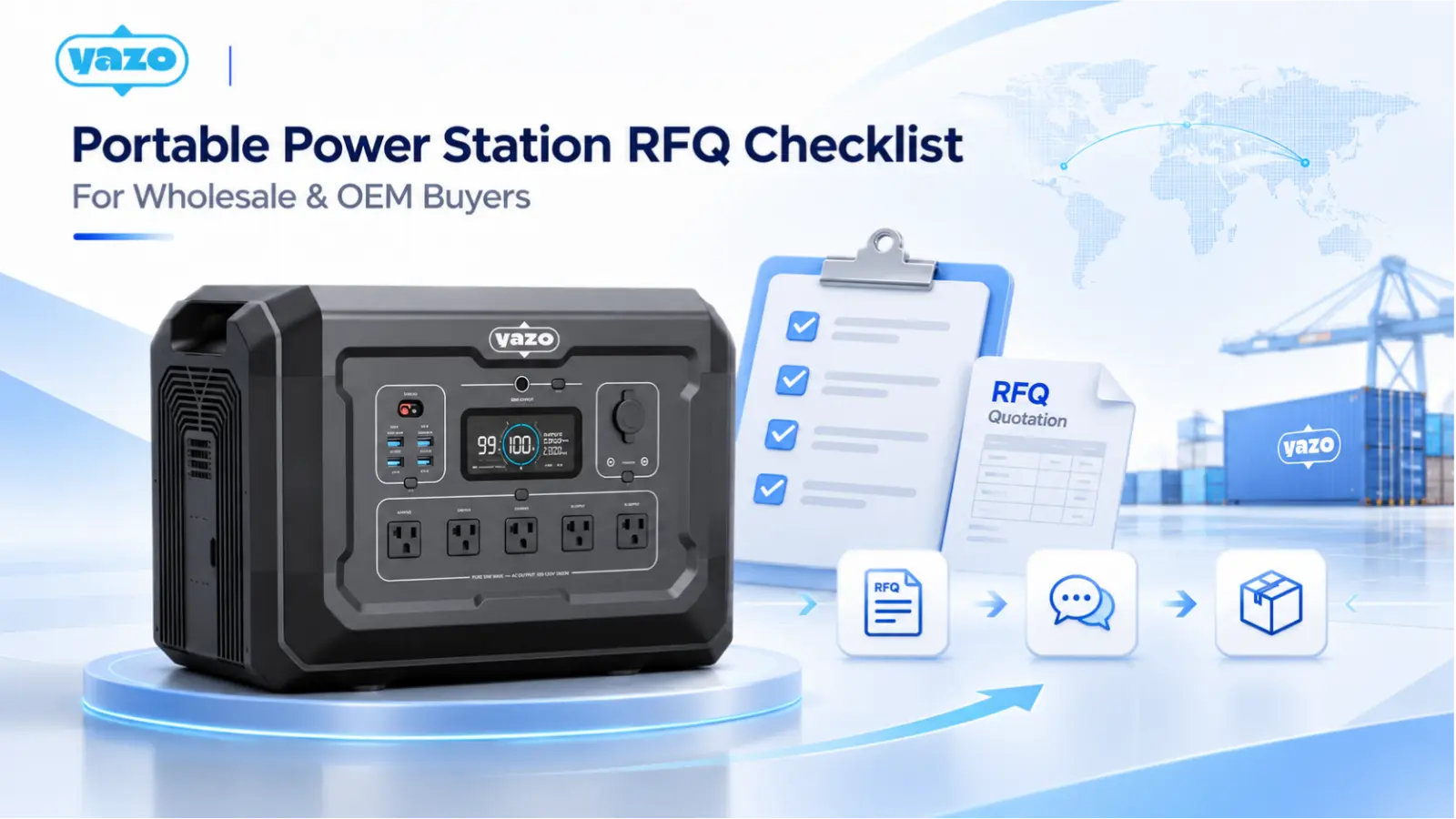
Use this checklist to structure a supplier enquiry. The product images and model names are illustrative; confirm the exact approved host-and-battery combination, cable and module count against current manufacturer documentation.
This is particularly important for bulk purchasing. Record the approved model references and supporting documents during sample evaluation, then carry the same configuration into the quotation and purchase order.
The product catalogue lists the Y2-2500W 2048Wh portable power station and the Y2-BAT 2048Wh expansion battery as separate SKUs. Treat them as separate product references until the current manual or a written compatibility matrix confirms that exact pairing, cable and supported module count.
6. Application Fit: Home Backup, Remote Work and Events
| Application | When fixed capacity may fit | When expansion may be worth evaluating | Key purchasing check |
|---|---|---|---|
| Home backup | The backed-up circuits and expected operating period are clearly defined. | The household needs a documented path to add energy capacity or the backup plan may change. | Critical loads, simultaneous demand, backup duration, charging plan and installation requirements. |
| Remote work and field deployment | The equipment list and daily work schedule are stable, and one unit meets the requirement. | The deployment period or energy demand varies and an approved modular system is practical to transport. | Equipment load, daily operating hours, recharge access, total kit weight and module handling. |
| Events and mobile operations | The event equipment and operating window are known in advance. | Different event packages require different energy reserves and the modules can be managed safely and efficiently. | Simultaneous loads, operating schedule, setup space, transport and recharge windows. |
| Distributor product range | The channel wants a compact range with clearly differentiated complete-unit SKUs. | The channel can support a base product plus compatible optional modules and explain the configuration clearly. | SKU mapping, package contents, inventory plan, product training and after-sales support. |
| OEM/ODM project | The brand has a defined specification and wants one approved configuration. | The project requires a modular product offer and the manufacturer can confirm the design and documentation scope. | Approved model combination, regional configuration, branding, packaging and document requirements. |
For a China-based sourcing project, give the factory or supplier the intended application, destination market, expected mix of host units and expansion batteries, and estimated order quantity. The quotation should separate the base-unit and expansion-battery SKUs and identify any compatibility detail that still needs confirmation.
7. Questions Before Ordering an Expandable System
Use this checklist when requesting samples or comparing a wholesale, bulk or OEM/ODM quotation. It keeps the host unit, expansion battery, accessories and supporting documents aligned before an order is approved.
| RFQ item | Information to provide or request |
|---|---|
| Application and load | Intended use, connected equipment, rated watts, starting watts where relevant and simultaneous-load schedule. |
| Runtime target | Required operating period, typical daily use and any future increase in runtime requirements. |
| Base unit | Exact model/SKU, rated Wh, continuous output, surge rating and regional version. |
| Expansion battery | Exact compatible model, rated energy, package contents and separate product reference. |
| Compatibility | Written confirmation of the host/module combination, connection method and maximum supported expansion. |
| Charging arrangement | Supported charging inputs, charging procedure and any restrictions when modules are connected. |
| Portability and packaging | Dimensions, weight, handling instructions, carton details and whether the host and modules ship separately. |
| Destination market and compliance | Country, plug and voltage version, applicable documents and sales channel. If the market or tender cites UL 2743, verify the standard's scope and the certificate's coverage for the exact model; a standards reference alone does not establish certification. |
| Order structure | Expected quantity for the host unit and expansion battery, preferred bundle structure and requested spare accessories. |
| Commercial and service terms | Separate quotation, applicable MOQ and lead time, warranty scope, technical support and replacement-part process. |
| OEM/ODM scope | Branding, labels, packaging, manuals, regional configuration and any requested product changes. |

Buyer workflow illustration. Before treating Y2-BAT as an expansion option for Y2-2500W, obtain written confirmation of the compatible model revision, connection method, charging path and supported battery quantity.
Record the approved host model, expansion battery, cable and module count on the sample-approval record. Carry the same references into the quotation, purchase order and production specification so the bulk order matches the evaluated configuration.
Frequently Asked Questions
No. Expansion is useful only when additional energy capacity is needed and the selected model supports a compatible battery. If the load and runtime are stable, a fixed-capacity unit may be simpler to quote, stock, transport and use.
Not automatically. An expansion battery adds stored energy within the approved system configuration. The host unit's continuous output, surge capability and output ports remain subject to the manufacturer's stated ratings unless the product documentation explicitly specifies otherwise.
Do not assume so. Use only an expansion battery that the manufacturer identifies as compatible with the exact host model and revision. Similar connectors or capacity ratings are not sufficient proof of compatibility.
The supported quantity is model-specific. Ask the supplier for the maximum approved number of modules and the resulting system configuration. Do not estimate the expansion limit from the battery's appearance or from another model.
Not necessarily. Actual runtime depends on the load, conversion losses, operating conditions and system limits. A larger stored-energy capacity may extend operating time, but buyers should request a model-specific estimate based on the intended load rather than assume a fixed multiplier.
Confirm the host and expansion battery SKUs, approved combinations, package contents, separate pricing, inventory requirements, documentation, warranty scope and after-sales process. Product listings should clearly explain which models support expansion.
Provide the target application, base-unit requirements, expected capacity range, load and runtime profile, destination market, estimated quantity, branding and packaging scope, and any required documentation. Ask the supplier to confirm which expansion configurations are available for the proposed model.
Compare Expandable Power Options
Send your intended application, load schedule, required capacity range, destination market and expected order quantity. If expansion is required, include the proposed host and battery model numbers. These details help identify the model-specific compatibility points to confirm before sample approval or quotation.
Discuss Your Expansion Requirements