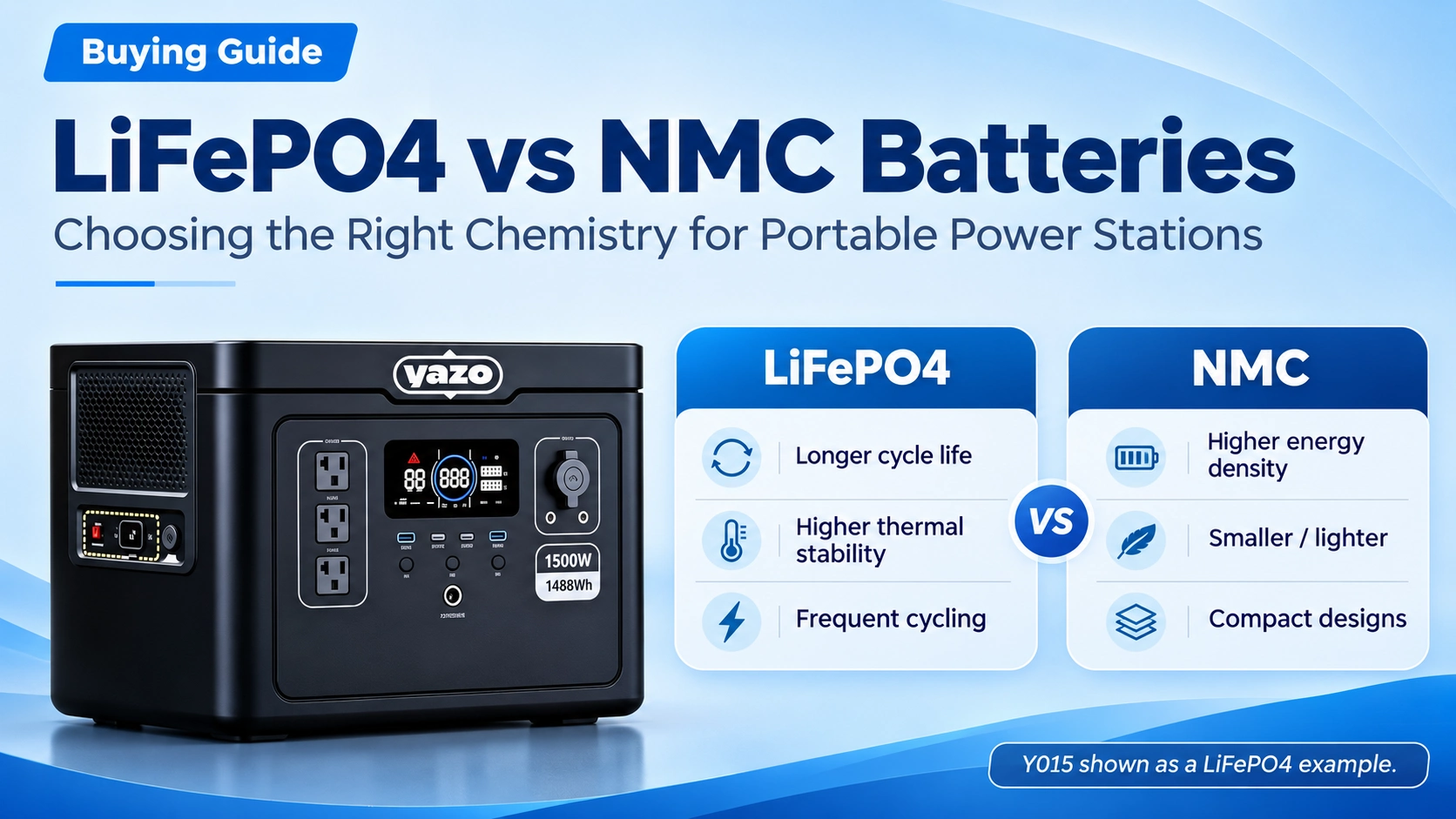


For importers, distributors, brand owners and engineering buyers sourcing portable power stations, confirming LiFePO4 chemistry is only one part of a battery review. Buyers also need to verify cell identity and traceability, pack specifications, BMS functions, system behavior, testing scope and documents for the quoted model. This guide explains what to request before sample approval or a wholesale, bulk or OEM/ODM order.
YAZO's Quality Assurance page outlines the broader quality approach. The checks below can help purchasing and engineering teams prepare an RFQ, review a sample and agree on the records needed for an order.
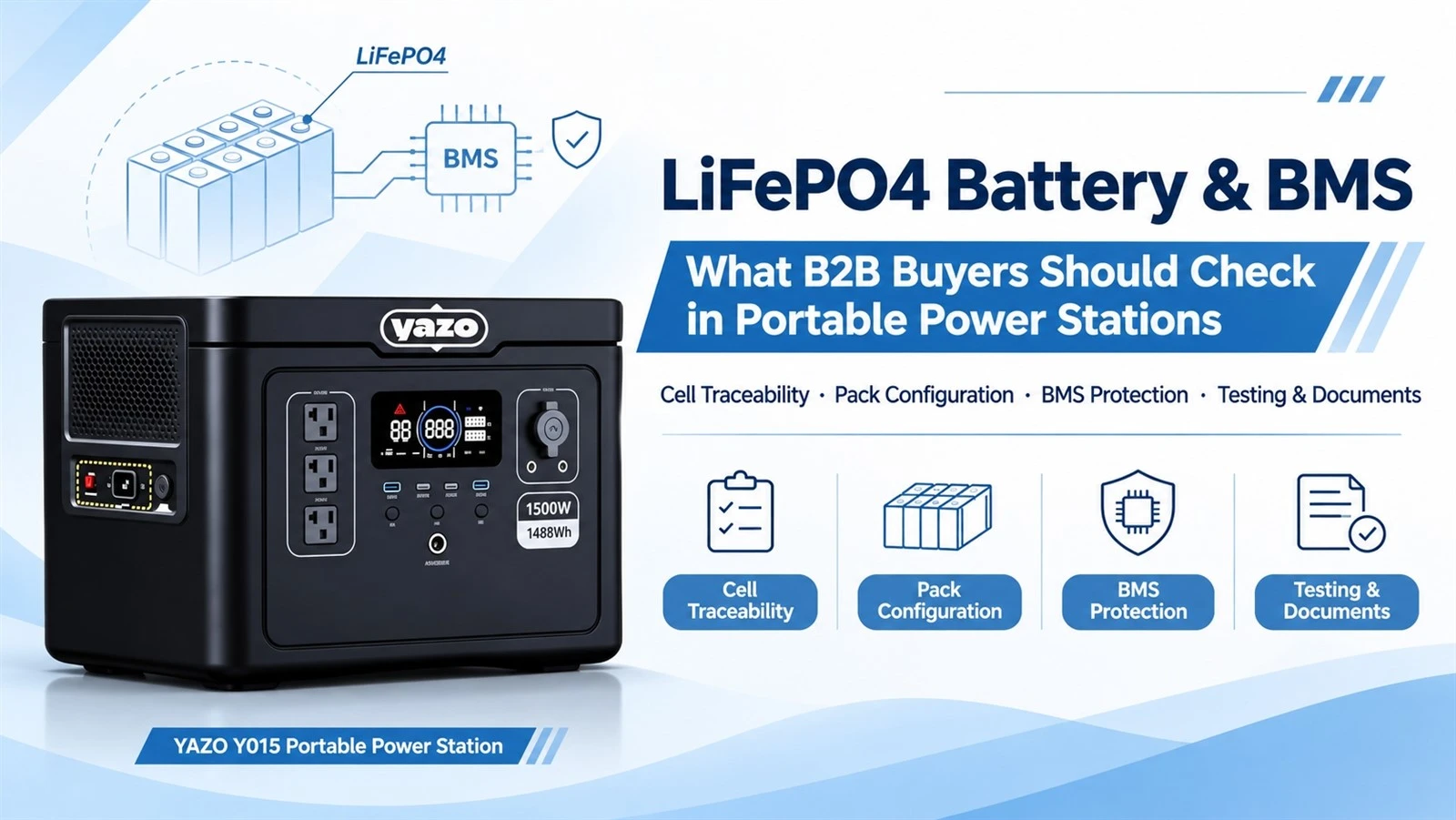
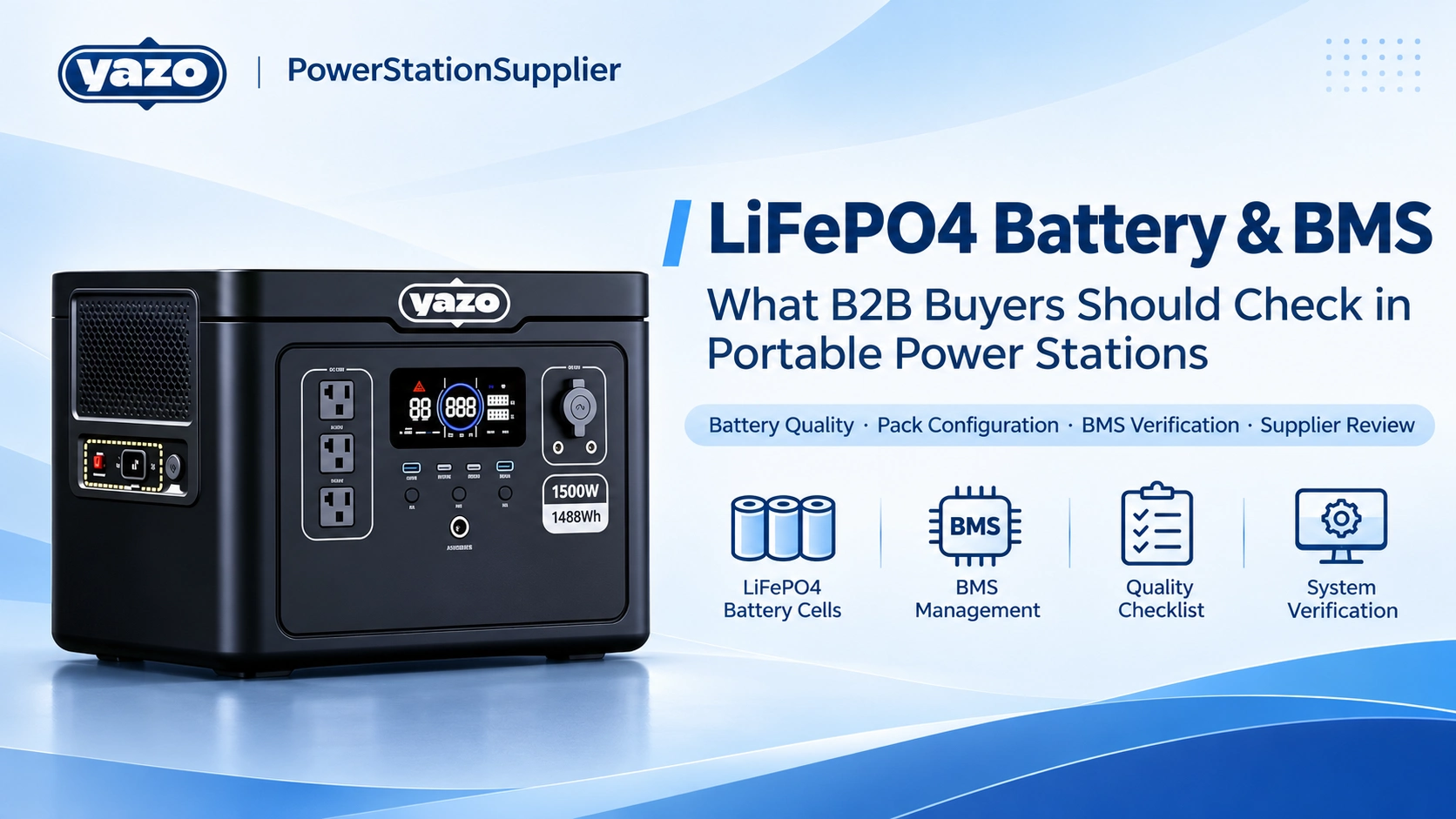
YAZO Y015 is a 1,488Wh LiFePO4 portable power station with 1,500W rated AC output. This cover combines the product image with illustrative battery and BMS symbols; the symbols do not depict its internal construction. See the Y015 product page for listed specifications. Confirm cell source, pack construction and BMS functions against the approved technical documents for the ordered version.
1. Verify Cell Identity, Chemistry and Traceability
LiFePO4 identifies the stated cell chemistry; it does not identify the cell maker, cell model, production lot or the way cells are assembled into the finished pack. Ask the supplier to confirm which cells are specified for the quoted SKU and what supporting information can be shared for the project.
If cell sourcing can vary between models or production orders, ask how substitutions are reviewed, recorded and communicated. Agree whether a change requires buyer approval before it is used in a sample or bulk order.
2. Check Pack Configuration and Rated Energy
Cell-level data and finished-pack specifications are related, but they are not interchangeable. For the quoted portable power station, compare the pack's nominal voltage, amp-hour capacity, rated watt-hours and configuration with the product datasheet and nameplate.
| Pack information | What to request | Why it matters |
|---|---|---|
| Nominal voltage | The stated pack voltage and the applicable model specification. | Provides a basis for reviewing pack architecture and system compatibility. |
| Capacity (Ah) | The rated amp-hour value and its stated test or specification basis. | Ah should be read together with voltage, not as a standalone energy figure. |
| Rated energy (Wh) | The declared battery energy for the exact model and version. | Allows the nameplate, datasheet and quotation to be compared on the same basis. |
| Pack configuration | An approved pack specification or configuration description, where available. | Helps engineering teams review the documented cell arrangement and connections. |
| Revision control | The specification revision and the process for recording approved changes. | Keeps quotation, sample and production references aligned. |
As a nominal calculation, watt-hours are approximately voltage multiplied by amp-hours (Wh ≈ V × Ah). Use the manufacturer's declared values and stated basis when comparing products. Do not infer a finished-pack rating from an assumed cell arrangement. If the label, datasheet and quotation differ, resolve the discrepancy before sample approval.
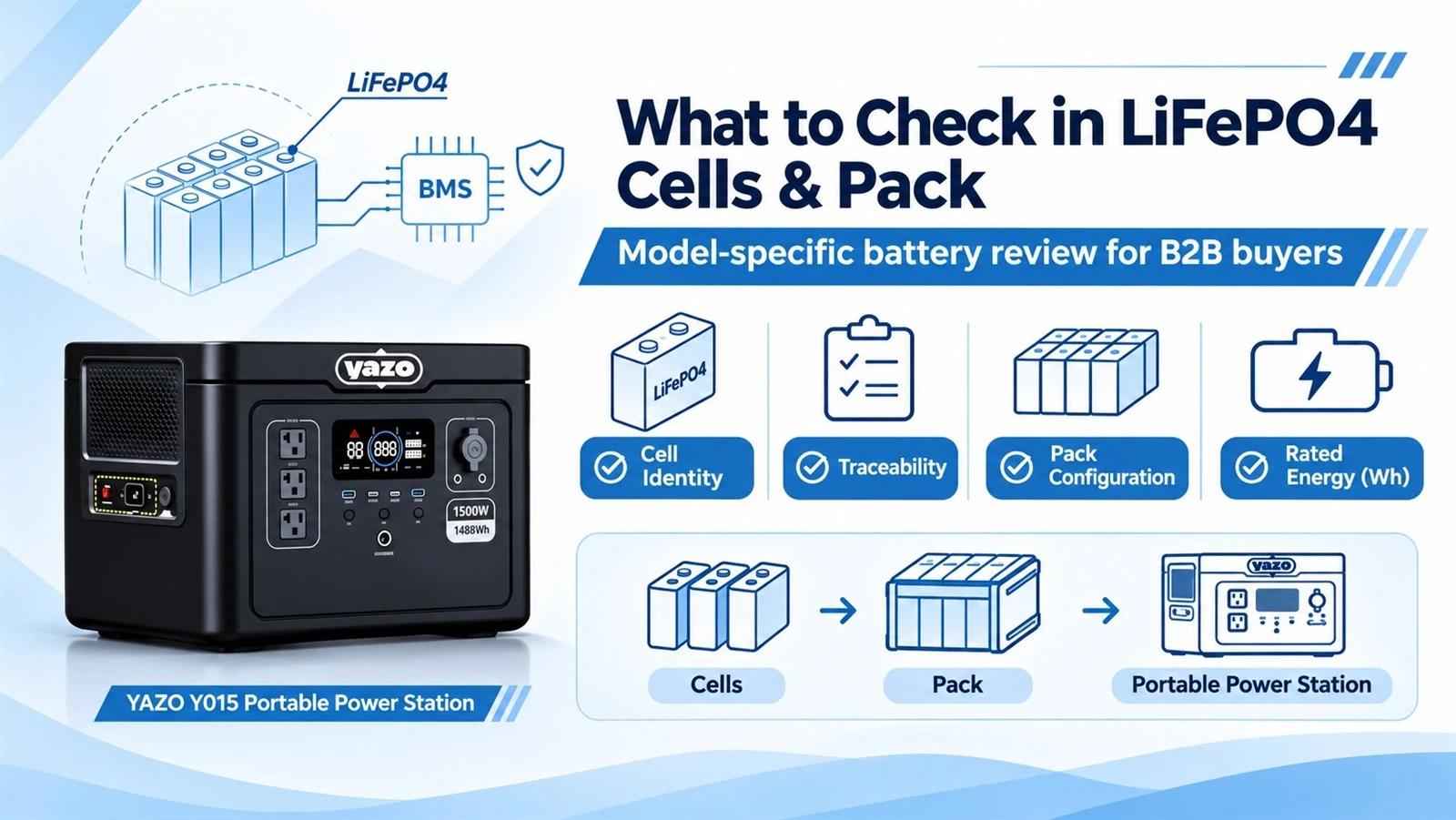
Illustrative buyer-review graphic only. It does not show Y015's actual internal cell arrangement or establish its cell supplier. Confirm those details through the approved pack specification and available traceability records.
3. Confirm the BMS Functions for the Quoted Model
A battery management system (BMS) monitors selected battery conditions and may coordinate protective or control actions. Depending on the design, its scope can include cell or pack voltage, charge and discharge current, temperature, state estimation, balancing and communication. Not every model includes the same sensors or functions.
| BMS area | Question for the supplier | Evidence to request |
|---|---|---|
| Voltage monitoring | Which cell or pack voltage points are monitored? | BMS specification or functional description for the relevant pack. |
| Current monitoring | How are charging and discharging current conditions monitored? | Rated operating information and the documented protection scope. |
| Temperature sensing | Where are sensors located, and which temperatures do they monitor? | Sensor arrangement or technical description, where available. |
| Protective response | Which abnormal conditions are covered, and what response is specified? | Protection-function list and relevant verification records. |
| Balancing and communication | Are balancing, status reporting or communication functions provided? | Applicable interface description or BMS documentation. |
Ask the supplier to distinguish standard functions from optional or unavailable features. Use approved model documents for numerical thresholds; generic online values should not be treated as the settings for a particular battery pack.
4. Check BMS Coordination Under Charging and Load Conditions
For battery approval, the practical question is how the BMS works with the power station's control system, inverter and charger when operating limits are approached. Ask what the product is designed to do and what behavior has been verified for the selected model.
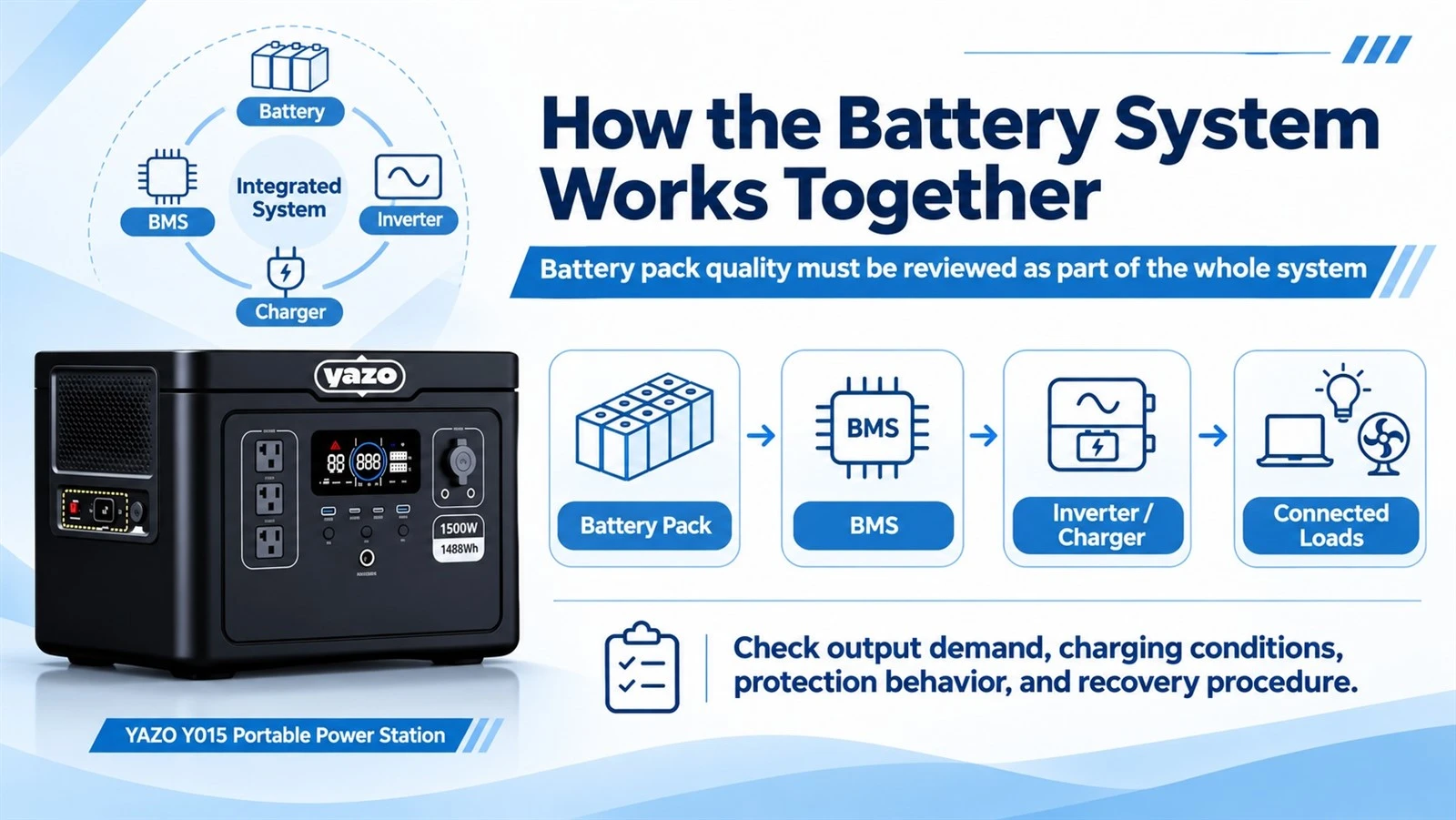
Conceptual system illustration, not a wiring diagram, test result or representation of Y015's internal BMS layout. Actual interfaces and protective behavior must be confirmed from model-specific documentation.
| Operating condition | What buyers should ask | What to confirm |
|---|---|---|
| High discharge demand | What happens if voltage, current or temperature reaches a defined limit? | Documented warning, output limitation or shutdown behavior, as applicable. |
| Charging operation | How are charging limits and protective cutoffs coordinated? | Supported charging conditions and any stated stop/restart behavior. |
| Fault recovery | What indication appears, and what should the user or service team do? | Manual instructions, reset criteria and service guidance for the model. |
For the broader relationship between the battery pack, BMS, inverter and charging circuits, see the Portable Power Station Architecture guide. This article focuses on the battery-specific checks buyers should complete before approving a sample.
5. Review Thermal and Mechanical Pack Design
Electrical specifications do not describe the full battery pack. Mechanical support, electrical connections, insulation, cable routing, enclosure design and thermal considerations all affect the finished assembly. Review these features against the actual product design rather than inferring them from an exterior product photo.
Depending on the project, useful records may include approved pack drawings, assembly inspection points, relevant test records or photographs of the actual component and assembly stage. A general factory photo is not evidence that a particular feature or inspection step applies to the quoted SKU.
6. Review Testing at Sample and Batch Stages
Separate design validation, sample evaluation and routine production inspection. A sample test describes the unit and conditions assessed; production records show which controls were applied to a defined manufacturing run.
| Review stage | Question for the supplier | Record to request, where available |
|---|---|---|
| Specification release | Are the cell, pack and BMS specifications aligned to this model? | Approved specification and revision reference. |
| Sample evaluation | Which checks are performed on the submitted sample, and under what conditions? | Sample inspection or test record identifying the unit and test scope. |
| Production inspection | Which incoming, assembly and finished-product checks apply to the order? | Applicable inspection checklist or batch record. |
| Pre-shipment review | Which final product, accessory, label and document checks are included? | Order-linked inspection or shipment-preparation record. |
| Change control | How are changes to cells, BMS, pack design or key components reviewed? | Relevant change notification or approval record. |
A statement such as "100% tested" is not a complete test description. Ask what is tested, which model or batch is covered, what acceptance criteria apply and whether a record can be linked to the order. YAZO's Quality Control & Testing page provides an overview; confirm the actual checks and records available for your project.
7. Match Documents to the Model and Destination Market
Battery-related documents can apply to a cell, battery pack, finished power station or defined product family. Before relying on a document, check its product identity, configuration, revision, issuing organization and intended market.
| Document category | What buyers should match |
|---|---|
| Product datasheet | Model/SKU, rated values, regional version and document revision. |
| Battery or pack specification | Cell chemistry, pack identity, nominal values and configuration reference. |
| BMS information | BMS model or revision, documented functions and applicable pack. |
| Test report | Tested sample or model, test scope, date and issuing organization, where stated. |
| Certificate or declaration | Certificate holder, product scope, model coverage, standard edition and market applicability. |
| Transport documents | Battery/product identity, shipment configuration and requirements for the selected route. |
For compliance questions, review YAZO's Certifications & Compliance information and request documents relevant to the selected model and destination. UL 2743 is a standard for portable power packs. A standard reference is not proof that a particular YAZO product is certified to it; verify any claim against the certificate and its stated product scope.
8. Battery & BMS Approval Checklist for B2B Buyers
Use this checklist when evaluating a China-based portable power station factory or comparing wholesale suppliers. Record each response against the quoted SKU and specification revision so RFQs, sample approvals and bulk-order reviews use the same reference.
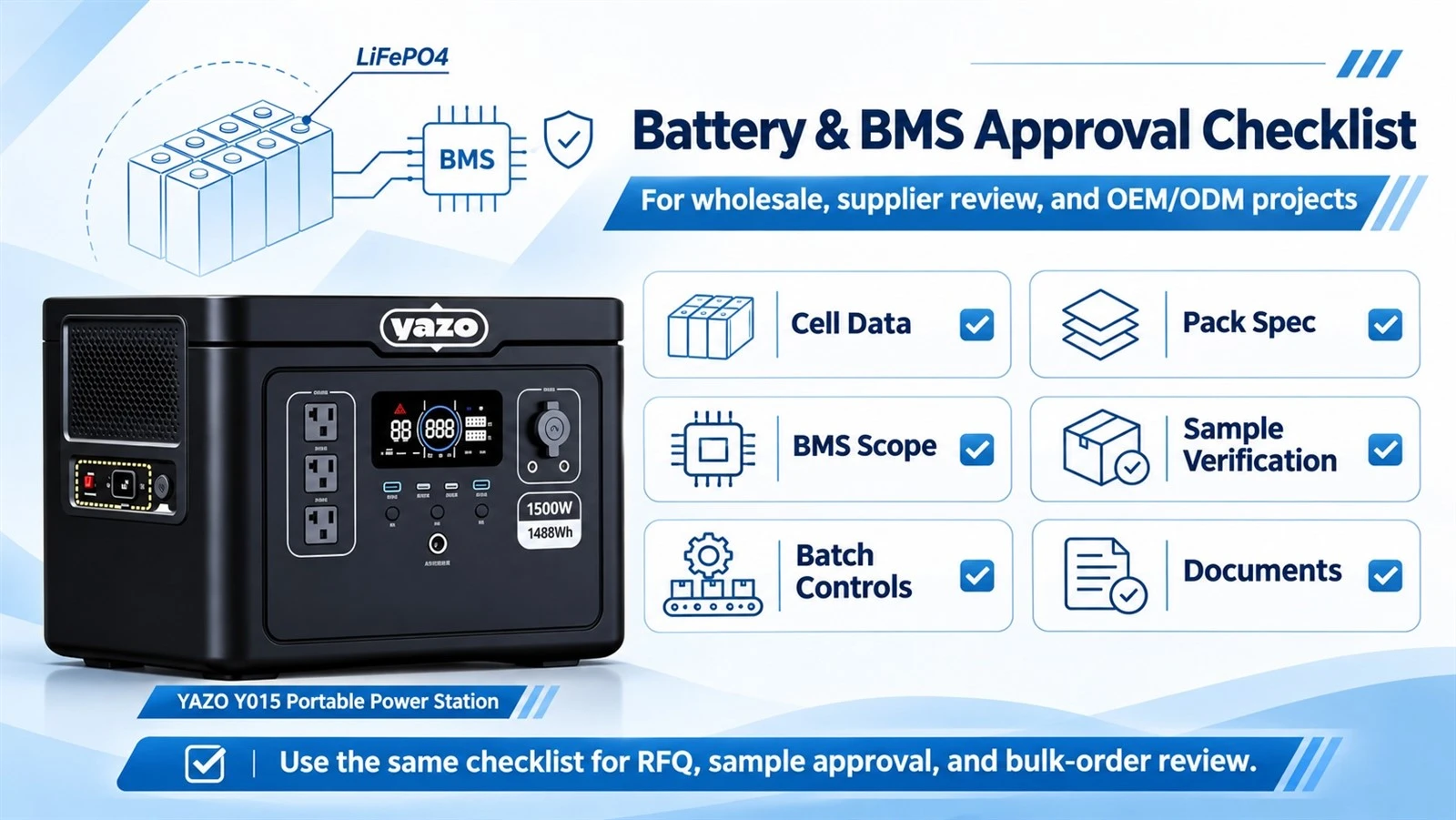
Blank review template for supplier screening and buyer approval. Empty boxes represent items to verify; they are not test results or approval claims for YAZO Y015.
| Approval item | Evidence or answer to obtain | Review status |
|---|---|---|
| Cell identity | Cell maker/model information and applicable SKU or revision. | Pending / Reviewed |
| Cell traceability | Available lot, batch or incoming-inspection reference. | Pending / Reviewed |
| Pack specification | Nominal voltage, Ah, Wh and configuration reference. | Pending / Reviewed |
| BMS scope | Monitoring points, protection functions and applicable documentation. | Pending / Reviewed |
| System behavior | Charging, load response and recovery information relevant to the application. | Pending / Reviewed |
| Mechanical and thermal design | Applicable drawings, inspection points or approved evidence. | Pending / Reviewed |
| Sample verification | Sample identity, test scope, conditions and available records. | Pending / Reviewed |
| Production controls | Relevant incoming, assembly, finished-unit and change-control checks. | Pending / Reviewed |
| Documents | Model-matched datasheets, reports and applicable certificates or declarations. | Pending / Reviewed |
| Order alignment | Approved SKU, quantity, destination market and specification revision. | Pending / Reviewed |
For OEM or ODM projects, add branding, enclosure, accessory, regional electrical configuration, manuals and packaging to the same revision-controlled specification. Review requested component or design changes before they are accepted into the approved sample or production order.
Frequently Asked Questions
Does a LiFePO4 label guarantee battery pack quality?
No. It identifies the stated cell chemistry, but does not confirm the cell source, pack configuration, BMS functions, assembly controls or model-specific test results. Review these items separately before approving a product.
Which BMS details should a buyer request?
Ask which voltage, current and temperature conditions are monitored, what protection functions are included, whether balancing or communication is supported, and what records are available for the quoted model. Do not assume that all BMS designs use the same functions or thresholds.
Can one battery document cover every portable power station model?
Not automatically. A document may apply to a cell, pack, finished model, product family or regional version. Check the model identity, configuration and revision before using it for a purchasing decision.
What evidence should be reviewed before sample approval?
Match the sample to the quotation and approved specification, then review available cell and pack information, BMS functions, relevant test scope and inspection criteria. Record any open items before authorizing the sample.
What should an OEM/ODM battery and BMS RFQ include?
Include the target model or output/capacity range, required battery chemistry, pack data requested, BMS functions to be reviewed, application, destination market, sample and expected batch quantity, applicable documents, and any branding, labeling or packaging requirements. Identify items that still need confirmation.
Send Your Battery & BMS Technical Requirements
Share the target model or capacity/output range, application, destination market and expected order quantity. List the battery, pack and BMS information your team needs to review, along with any sample, documentation or OEM/ODM requirements.
Send Battery & BMS Requirements