
BUYING GUIDES / WHOLESALE & OEM
Selecting a portable power station manufacturer is a procurement decision that affects product consistency, market compliance, lead times and long-term service. The lowest quotation does not always represent the lowest business risk.
For distributors, private-label brands and project buyers, a structured evaluation helps identify a supplier that can support the exact order-not just advertise an extensive product range.
IN THIS GUIDE- 01Product & Market Fit
- 02Quality & Documentation
- 03OEM/ODM Project Control
- 04Commercial & Delivery Terms
Product Specifications Must Match the Destination Market
Start with the intended application rather than a supplier's best-selling model. Confirm rated AC output (W), battery capacity (Wh), supported charging inputs, inverter waveform, operating conditions and portability requirements. Review any proposed expansion-battery compatibility at the exact model level.
Confirm rated voltage, frequency, AC socket format and plug/accessory configuration for the destination country.
Separate camping and RV demand from essential-load backup, field work and more demanding professional use.
Request the supported solar input voltage, current, maximum input power and connector details, not just a generic "solar-ready" claim.
Quality Systems Need Model-Specific Supporting Evidence
Ask the supplier to explain incoming material inspection, assembly controls, functional testing, aging or endurance verification where applicable, final inspection and serial-number traceability. A factory tour or promotional photograph is useful context but cannot replace documentation for the ordered model.
For lithium-powered products, buyers should review applicable transport test summaries and shipment documentation. The IATA 2026 lithium battery guidance addresses UN 38.3 test-summary information for relevant battery shipments. In the U.S. market, ANSI/CAN/UL 2743:2025 covers certain portable power packs; applicable requirements depend on the product design and intended use. A portable power pack should not be assumed suitable for permanent building wiring or utility-interactive installation.
Request reports or certificates that identify the exact model, battery configuration, test standard, issuing organization and relevant destination market. Verify validity and scope rather than relying on logo images.
Customization Requirements Should Be Confirmed Before Mass Production
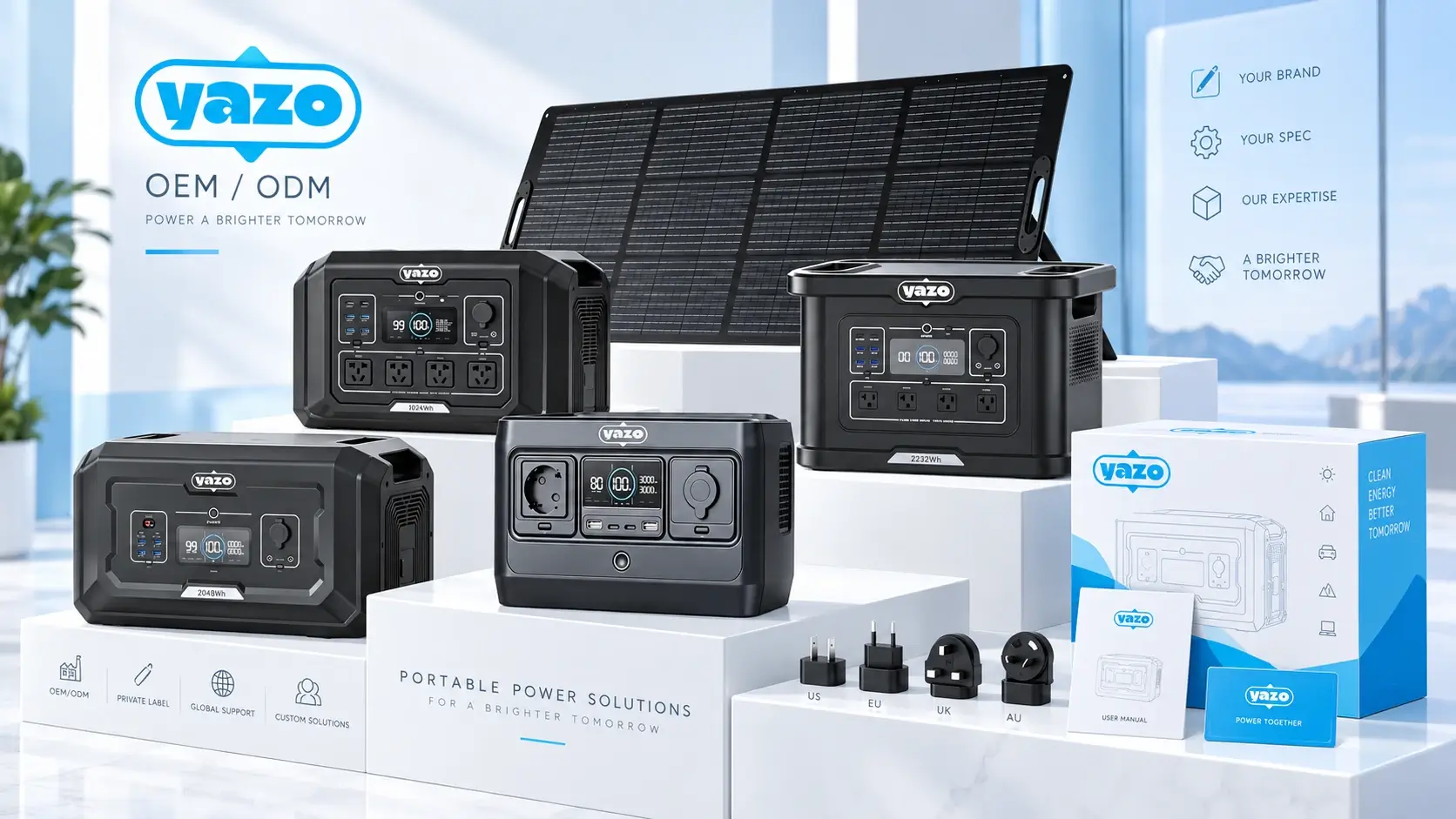
OEM orders can involve logo placement, color, packaging, user manuals, accessory kits and region-specific electrical configurations. More substantial ODM changes may require additional engineering work, tooling, validation and compliance review.
- Define a written specification. Record the approved model, electrical version, battery and charging characteristics, artwork and packaging details.
- Approve a representative sample. Check appearance, labels, interfaces, included accessories and functional behavior before confirming bulk production.
- Establish change control. Require advance approval for material, firmware, connector, battery-cell or packaging changes that may affect performance or compliance.
- Agree on inspection criteria. Specify the sampling plan, acceptance criteria, corrective-action process and shipment release responsibilities.
Commercial Terms Influence the Total Cost of Ownership
Compare quotations using the same specification and commercial basis. A meaningful comparison should include MOQ, sample cost, unit price, tooling or artwork charges, lead time, warranty approach, packaging, shipping terms and expected documentation. Confirm whether each quote includes identical batteries, cables, plugs and regional variants.
| Evaluation Item | Buyer Confirmation |
|---|---|
| MOQ & Price | Minimum quantity by model/version; quote validity and included accessories |
| Production Timing | Sample approval date, production lead time and capacity assumptions |
| Quality & Inspection | Inspection standards, reporting process and pre-shipment confirmation |
| After-Sales Support | Warranty scope, spare parts, fault reporting and resolution workflow |
| Shipping Documents | Battery transport papers, packaging details and destination-specific needs |
A Reliable Manufacturer Supports Repeatable Orders
Supplier selection is strongest when product suitability, verified documentation, controlled customization and delivery support are reviewed together. These factors help buyers assess whether an initial sample can be reproduced consistently across future wholesale or OEM orders.
ANSI/CAN/UL 2743:2025 - Portable Power Packs · IATA Lithium Battery Guidance 2026